An ambulette is a wheelchair-accessible van used for scheduled, non-emergency medical trips. It carries people who can’t safely ride in a car or bus, usually because they use a wheelchair or need help getting in and out, to places like doctor’s appointments, dialysis, therapy, or home from the hospital. An ambulette is not an ambulance. It has no lights and sirens, it doesn’t answer 911 calls, and it isn’t set up to give emergency medical care on the way.
That’s the short answer. The rest of this page explains where the word comes from, how an ambulette differs from an ambulance, what’s inside one, and who uses them, so you can tell quickly which kind of ride your family actually needs.
What is an ambulette?
An ambulette is a van, or sometimes a small bus, that has been modified so a person can board without leaving their wheelchair. Most have a hydraulic lift or a fold-out ramp at the side or rear, floor tracks with tie-downs that lock the wheelchair in place, and seat belts and shoulder harnesses for the rider. Many also carry a few standard seats for a family member or aide.
The defining features are:
- Non-emergency. Trips are booked ahead of time for a patient who is medically stable.
- Accessible. The vehicle is built for wheelchairs and for people with limited mobility.
- Door-to-door help. The driver, and sometimes a second attendant, helps the rider from their door to the vehicle and from the vehicle to the destination.
- Basic, not clinical. Staff are usually trained in safe transfers, first aid, and CPR. They don’t provide ongoing medical treatment during the ride.
Some companies that run ambulettes also offer stretcher vans for people who can’t sit up. Those are sometimes grouped under the same name, though “ambulette” most often means the wheelchair version.
What does “ambulette” mean?
The word is a blend of ambulance and the suffix -ette, which means a smaller version of something (as in kitchenette). So the literal meaning is “a little ambulance.” The name fits the history: ambulettes grew up as a lighter, simpler alternative to sending a full ambulance for patients who only needed accessible transportation.
The term is especially common in New York, New Jersey, and the rest of the Northeast. In other parts of the country you’ll more often hear the same service called wheelchair transportation, medical van service, paratransit, or non-emergency medical transportation (NEMT). The service is essentially the same; only the label changes.
You’ll see the word misspelled a lot, too: ambulete, ambulet, ambullette. They all refer to the same thing.
Ambulette vs. ambulance: the key differences
The two get confused because the names sound alike. They do very different jobs.
| Ambulette | Ambulance | |
|---|---|---|
| Purpose | Scheduled, non-emergency rides | Emergencies, plus medical transfers that need care en route |
| Patient | Medically stable; often uses a wheelchair | Ill or injured; may be unstable |
| How it’s booked | Ahead of time, by the patient, family, or a facility | Through 911, or arranged by a hospital |
| Lights and sirens | No | Yes, for emergencies |
| Crew | A driver, sometimes an attendant; trained in transfers, first aid, and CPR | A crew trained in emergency medicine |
| Equipment | Wheelchair lift or ramp, tie-downs, safety restraints | Stretcher, oxygen, monitors, emergency medications and supplies |
| Patient position | Usually seated in their own wheelchair | Lying on a stretcher |
| Typical trip | Across town, to a regular appointment | To the nearest emergency room, or between hospitals |
The simplest test: if the person needs medical care during the ride, or might need it urgently, an ambulette is the wrong vehicle. If they’re stable and just need an accessible, safe ride with a helping hand, an ambulette is usually the right one.
What’s inside an ambulette
Exact equipment varies by company and state, but a typical ambulette carries:
- A wheelchair lift or ramp
- Floor tracks and four-point tie-downs that secure the wheelchair
- Lap and shoulder belts for the rider
- Grab handles and non-slip flooring
- A first-aid kit and, often, a fire extinguisher
- Seating for a companion or aide
What it usually does not carry: a hospital-style bed, cardiac monitors, or a medical professional to give care during the trip. Some providers can accommodate a rider’s own portable oxygen, so ask in advance if that applies.
Who uses ambulette services?
Ambulettes serve people who can’t drive themselves, can’t manage a regular car or taxi, and don’t need an ambulance. Common examples:
- Wheelchair users going to medical appointments
- Dialysis patients who need rides several times a week
- Seniors who can no longer climb into a car safely
- People recovering from surgery or a stroke, heading to physical or occupational therapy
- Patients being discharged from a hospital or rehab center to home
- Residents of nursing homes or assisted living traveling to outside appointments
Because the trips are short and often repeat on a schedule, ambulette companies are usually local businesses serving one city or region.
What an ambulette is not
A few common misunderstandings are worth clearing up:
- It’s not an emergency service. For chest pain, trouble breathing, a fall with injury, or any sudden change, call 911.
- It’s not a medical transport with care aboard. If someone needs oxygen managed, medications given on schedule, or monitoring during the trip, they need a vehicle staffed for that.
- It’s not built for long distances. An ambulette trip is usually measured in minutes, not hours. Sitting upright in a wheelchair for an all-day ride is hard on anyone, and especially hard on someone who is frail or recovering.
When the trip is hundreds of miles: the long-distance version
Local ambulettes handle the trip across town. But some families need something different: moving a parent from a rehab center in Florida to assisted living near family in Ohio, or bringing a husband home from a hospital three states away. That’s a long way to sit in a wheelchair, and most local ambulette companies don’t travel that far.
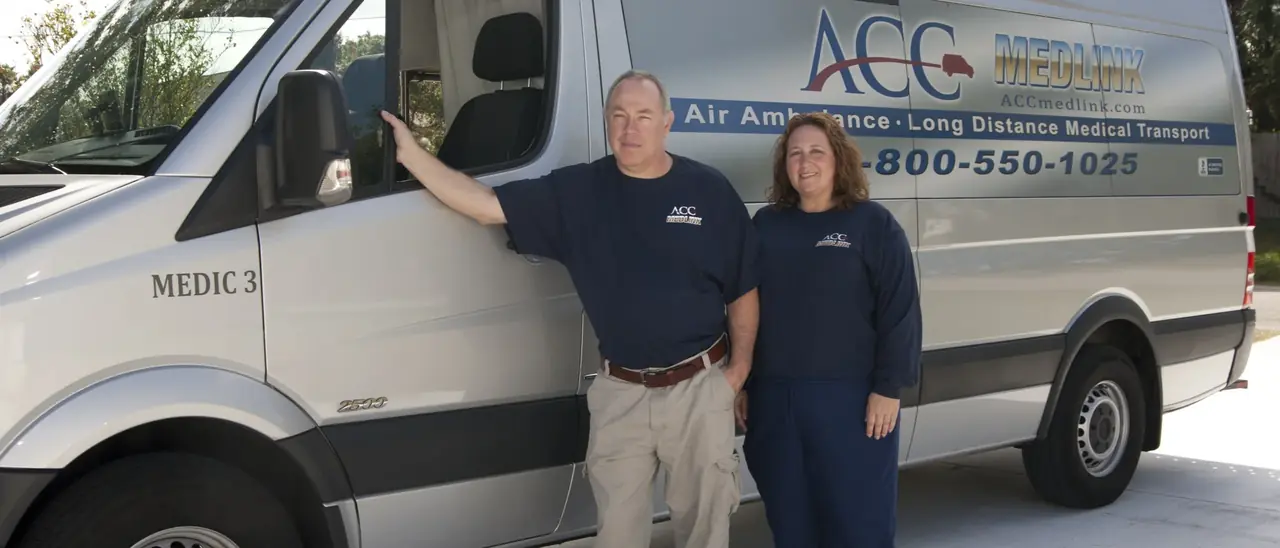
That’s the gap ACC Medlink fills. We don’t run local ambulette rides. We run the long version: trips of 200 miles and up, anywhere in the lower 48 states, in Mercedes Sprinters with a real bed on a memory-foam mattress for anyone who can’t sit up that long, a licensed medical professional aboard for the entire trip, and a seat and a bed for family, right beside the patient.
If that’s the trip you’re planning, our long-distance ambulette service page explains how it works, what’s aboard, and how to get a same-day quote. If the person needs to lie down the whole way, read about bed-to-bed transport. And if you’re comparing all the ways to make a long trip with a medical need, our guide to long distance non-emergency medical transportation lays out the options side by side.
If your trip is local, under 200 miles, a nearby ambulette provider is the right call, and usually far less costly than a long-distance service.
How to choose an ambulette provider
Whether the trip is local or long, these questions sort good providers from risky ones:
- Do you own the vehicles and use your own drivers, or do you book the ride out to another company?
- What training do your drivers and attendants have? Transfers, first aid, and CPR at minimum.
- Is the vehicle equipped for this rider? Wheelchair width and weight, a stretcher if needed, room for a companion.
- Will someone help from door to door, including stairs, or only curb to curb?
- Can a family member ride along?
- What happens if the appointment runs late? Ask about wait time and return trips.
- What will the total cost be, in writing, before the ride?
Frequently asked questions
What does ambulette mean?
“Ambulette” combines “ambulance” with “-ette,” meaning small. It describes a wheelchair-accessible van used for non-emergency medical trips: a smaller, simpler cousin of the ambulance.
Is an ambulette the same as an ambulance?
No. An ambulance responds to emergencies and carries a crew trained in emergency medicine, plus equipment to treat a patient on the way. An ambulette provides scheduled, accessible rides for stable patients and isn’t equipped for emergency care.
Can someone ride in their own wheelchair?
Yes. That’s the main point of an ambulette. The rider rolls up the lift or ramp, and the wheelchair is locked to the floor with tie-downs for the trip.
Can a family member ride along?
Usually, yes, if there’s a seat available. Ask when you book. On ACC Medlink’s long-distance trips, family rides right beside the patient, with a real seat and a bed to rest on.
How far will an ambulette go?
Most local ambulette companies serve a single city or region and keep trips short. For trips of 200 miles or more, look for a long-distance medical transport company instead. ACC Medlink’s long-distance ambulette service starts at 200 miles.
Does an ambulette have medical staff aboard?
Typically not. Ambulette staff are trained to move riders safely and respond with first aid, not to provide medical care during the trip. If the rider needs care en route, choose a medical transport with a medical professional aboard.
Planning a long-distance move for someone who uses a wheelchair or can’t sit up for hours? Call ACC Medlink at 800-550-1025, day or night, for a same-day quote, or request a quote online.