The oncologist said the words “specialty center,” and suddenly the next step in treatment is hundreds of miles away. Maybe it’s a clinical trial, a surgeon who does this exact operation, or a team that sees this type of cancer every day. The question at your kitchen table is simple and hard: how do we get there when flying isn’t an option?
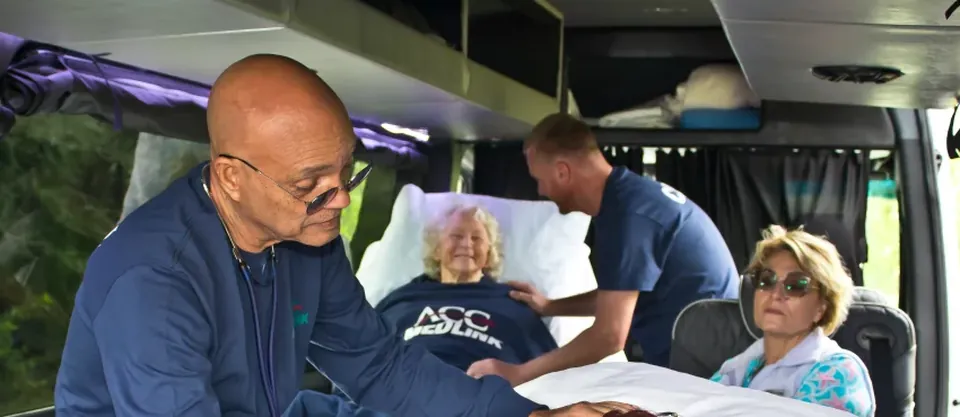
For a lot of families, the answer is long-distance ground medical transport: transportation for cancer patients to treatment centers far from home, bed to bed, in a medical van with a licensed medical professional aboard and a family member riding along. It has a clear limit, though. Our trips are 200 miles minimum. We’re the trip to the center and the trip home, not the weekly ride to chemo.
Why Flying to a Cancer Center Often Doesn’t Work
Treatment can make an airport feel impossible. She may be too weak or sore to sit upright through security, a gate, and a flight. She may need oxygen, or tire after a few steps. Her care team may have told her to stay away from crowds while her counts are low. She may have just had surgery and need to lie flat. And nobody can promise how she’ll feel on a given morning, so a missed flight can mean a missed start date.
If any of that sounds familiar, ask the oncology team two questions: is a long ground trip safe right now, and what precautions should we take on the road? Their answer should shape the plan.
Transportation for Cancer Patients to Treatment Centers: What the Ride Is Like
When her immune system is low
It’s a private vehicle, not a shared shuttle. The only people near her are our crew and the family she brings. The van is cleaned and wiped down after every trip, and the bedside commode is disinfected after each use. Meals are picked up along the way, ordered ahead or through a drive-through, so nobody has to sit in a crowded restaurant. If the oncology team has rules, like masks for everyone, tell us when you book so it’s in the crew’s notes before they arrive.
When nausea comes and goes
Ask the oncology team to prescribe something for nausea for the trip and send it with her other medications. The crew gives the medications that travel with her. They don’t carry their own supply. Stops happen when she needs them, not on a fixed schedule, and there’s a bedside commode with a privacy curtain on board. Keep a change of clothes where you can reach it.
When she has to lie flat after surgery
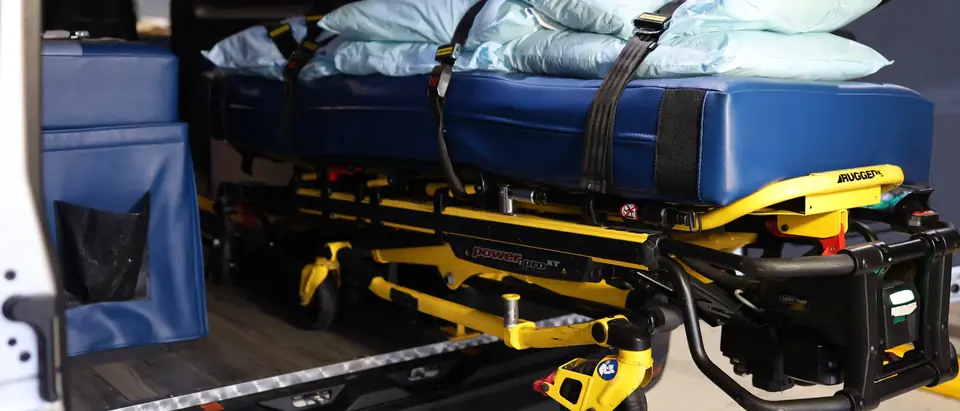
She rides in a real bed on a memory-foam mattress, so she can lie flat the whole way, and the bed adjusts if the surgeon would rather she be raised a little. Ask the surgical team how she should be positioned and how often she should shift, then tell us, so the medical professional on board can help her follow it.
Can Someone With Stage 4 Lung Cancer Travel to a Specialty Center by Ground?
Often, yes, if the doctor clears the trip. November is Lung Cancer Awareness Month, and it’s a fair time to say something plainly: for many people with lung cancer, it’s the breathlessness, not the distance, that rules out an airport. By ground, oxygen (concentrator and tanks) rides on board, she can lie down or rest propped up, and nobody asks her to walk a terminal. The deciding voice is the oncology team’s, so ask them first, and we’ll coordinate with them on timing.
What About the Trip Home After Treatment?
The way back can be harder to plan than the way there. After surgery or a long course of treatment, people are often weaker going home than they were arriving. Call us as soon as the center gives you a likely discharge date, even a rough one, and we’ll plan backward from it.
Sometimes the trip home is for a different reason: treatment has stopped helping, and the goal is now comfort, at home. That trip can be calm and unhurried too, and we coordinate with the hospice teams at both ends. Our hospice transportation page explains how it works.
Where Will the Family Stay?
If treatment runs for weeks, someone will need a place near the center. Ask the center’s social worker or patient navigator about patient housing; many centers keep a list of nearby options. The American Cancer Society runs Hope Lodge, which offers lodging for patients and caregivers in some cities. If the family member who rides along in the van isn’t staying, plan their way home early, so it isn’t a scramble on arrival day.
What We Don’t Do
We don’t do daily or weekly rides to chemotherapy or radiation, or any trip under 200 miles. For those, the center’s social worker is the right person to ask. The American Cancer Society’s Road To Recovery program offers rides in many areas, and the center’s staff will know what’s available nearby.
Before You Book
- The start date and the exact arrival address (main entrance, admitting, or a specific unit)
- The oncology team’s OK for a ground trip of this length
- A current medication list, plus the medications in their original bottles, including anything for nausea or pain
- Records, imaging discs, or a doctor’s summary, if the center asked for them
- Photo ID and power of attorney or healthcare proxy papers
- Soft, loose clothes, a warm layer, and her own pillow or blanket
How Do We Pay for It?
It’s private-pay, paid by the patient or family. You’ll have a same-day itemized quote before you decide, and once you approve it, that price doesn’t change. CareCredit financing can spread the cost over time, and we offer a veteran discount. Here’s what drives the price of a long-distance trip. If she’s cleared to fly and can sit upright, a commercial medical escort is worth pricing too.
So much of cancer care turns out to be logistics: the right team, the right date, a bed waiting at the other end. If a distant center is the next step, start with the oncology team’s answer on whether a ground trip is safe.
Then call us at 800-550-1025, day or night, with the two addresses, the start date, and how she’s been feeling this week. You’ll have the price the same day, and asking doesn’t commit you to anything. You can also request a quote online.