Veterans Day is November 11. If you landed here, you may be thinking less about the parade and more about a call you have to make. Dad needs to get to a VA medical center three states away. Or a bed just opened at a state veterans home near you, and he can’t sit in a car for fourteen hours to get there.
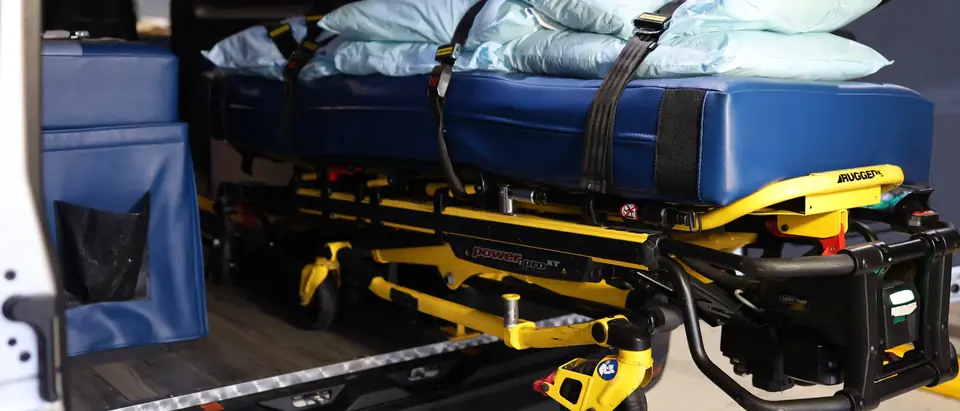
For most families, veterans medical transport means a long drive, a patient who needs to lie down, and a lot of paperwork. ACC Medlink provides long-distance medical transport for veterans, bed to bed, on a real bed with a licensed medical professional beside them and family along. Our trips are 200 miles minimum, and we offer a veteran discount.
How Families Pay for Veterans Medical Transport
ACC Medlink is private-pay: the family pays us directly by card, check, Zelle, or wire. We don’t accept VA benefits, so plan on paying for the trip privately. You’ll have a quote the same day you call, before anything is booked.
How Does the Veteran Discount Work?
Tell us he served on the first call, and we’ll apply the discount to the quote. We may ask for proof of service when you book; the DD-214 is the document most families have. Each discount is granted at our discretion. It’s a thank-you rather than a big markdown, so ask your Transport Specialist what it comes to on your quote.
Price itself depends on distance, the level of care, and crew, and you’ll see one itemized price for the whole trip. The quote you approve is the price you pay. Our cost page explains what drives the cost of a long-distance trip, and CareCredit financing can spread it over time if paying at once is hard.

Veterans Medical Transport to a VA Center or State Veterans Home
Most of the delays families hit come from waiting on the two facilities to agree. Before we can put a date on the calendar, a few things need to be settled:
Going to a VA medical center or another hospital? There has to be a confirmed discharge where he is now and a confirmed acceptance at the other end, meaning a bed and an accepting doctor. The care team at the sending hospital arranges that acceptance, usually through the receiving hospital’s transfer office. A family member can’t set it up alone, so if nobody has made that call yet, ask his case manager who is making it.
Going to a state veterans home? You need an admission decision and a move-in date. State veterans homes are run by each state, and the admissions office will have its own list, which almost always includes proof of service. Ask for the list early.
Either way, his doctor has to agree he’s stable enough for a long ground trip. We won’t move anyone against medical advice. Once those pieces are in place and you book, we coordinate pickup and arrival times with both the sending and receiving staff, so you’re not the go-between. Case managers can see how that works on our case managers page.
Paperwork to Find This Week
- His DD-214 (a copy, not the original). If it’s lost, a veteran or next of kin can request a copy through the National Archives. Start now; it isn’t instant.
- His VA ID card and the name and number of his VA social worker.
- Healthcare proxy or power of attorney papers.
- A current medication list with doses and times.
- The admissions or acceptance contact at the receiving facility.
- Any DNR or out-of-hospital order. Ask his doctor whether the destination state will honor it or needs its own form.
What If He Doesn’t Want to Go, or Gets Agitated on the Way?
This one keeps a lot of families up at night, especially with dementia in the picture. Some veterans don’t do well with strangers handling them or with being moved somewhere unfamiliar. Tell us on the first call what sets him off and what calms him down. The crew would rather know before they walk in.
Having someone he trusts ride along helps more than anything else. If anxiety on a long trip is likely, talk to his doctor about it ahead of time. The crew will be patient, but they can’t force anyone onto the van, so it’s worth planning for a calm start. If his health changes on the road, they re-route to the nearest emergency room.
Can His Wife or Daughter Ride Along?
Yes. A family member rides in the back with him, with a seat and a bed to rest on right beside his. We typically take up to two additional passengers, so a spouse and an adult child can often both come. Ask on the call what your route allows.
To every veteran, and to the families caring for one now: thank you. When you’re ready, call with where he is, where he’s going, and the name of his social worker or the admissions contact if you have one. Tell us he served. You’ll have an itemized price the same day, with no obligation, and we’ll work out the timing with both ends.
Call 800-550-1025, answered 24/7, or request a same-day quote online. You can also read more about how ACC Medlink’s long-distance medical transport works.