The doctors have used the word hospice, and someone you love has said what they want: to go home. Maybe home is three states away. Maybe it’s the house they raised you in, or your guest room, or a hospice facility near the grandchildren. And you’ve been handed the job of getting them there.
Long-distance hospice transportation is how that trip usually happens. Your loved one travels bed to bed in a medical van, lying in a real bed, with a licensed medical professional beside them and family in the seat next to them. The trip is planned around their comfort and around the hospice teams at both ends, and it can often happen within days of the first call.
What Hospice Transportation Covers, and What It Doesn’t
People search for hospice transportation meaning a few different things: transport to hospice from a hospital or nursing facility, transport from hospice care in one place to a family member’s home in another, or either one across hundreds of miles. We only do the long-distance kind. Our trips start at 200 miles, so if home is across town, the hospice team or a local provider is the right call. If home is in another state, that’s a trip our crews make every week. Our long-distance hospice transportation page covers the basics.
It isn’t an emergency ambulance ride, either. There’s no siren and no rush. The point of the trip is the time after it ends.
Can a Hospice Patient Travel That Far?
Often, yes. But the answer has to come from the hospice team, not from us and not from hope. Ask them plainly:
- “Is she stable enough for a ground trip of about this many hours?”
- “What would make you say wait, or don’t go?”
- “What should she have before she leaves, and what will she need on the road?”
- “If something changes on the way, who should the crew call?”
Our coordinators ask the care team the same questions. A patient has to be cleared to travel. If the doctor says the trip would go against medical advice, we can’t take it, and we’ll tell you so plainly.
If the answer is yes, go sooner rather than later. The bed at home matters. A freshly painted room doesn’t.
When time is very short and the distance is very long, ask the hospice team whether flying makes more sense. Sometimes it does. For most hospice patients, though, an airport asks too much: crowds, waits, and a seat they can’t lie down in. An air ambulance adds transfers between vehicles and leaves little room for family. Our ground vs. air comparison lays out the trade-offs. A ground trip keeps it simple. One vehicle, one bed, one crew from start to finish, and family within arm’s reach the whole way.
Setting Up Hospice at the Other End
This is the step families most often miss. Hospice care is local. The team caring for your loved one now usually serves only the area where they are. When they arrive in another state, a hospice program near the new home takes over, and it should be ready to admit them the day they arrive. Otherwise there can be a day or a weekend with no hospice nurse and no new medication orders, which is exactly when families feel most alone.
- Tell the current hospice team about the move and ask them to help transfer care. They do this often.
- Pick the receiving hospice. The current team, the destination doctor, or a local hospital can suggest programs. Call one and ask if they can admit on your arrival date.
- Make sure records and medication orders go ahead of the patient.
- Ask the receiving hospice to have a hospital bed, oxygen, and any other equipment delivered to the house before you arrive.
- Book the transport. Our coordinator talks with both hospice teams and times the trip around them.
If you haven’t started on the receiving hospice yet, that’s all right. It’s the one piece of homework on your side, and we’ll walk you through it on the first call.
What the Day Itself Looks Like
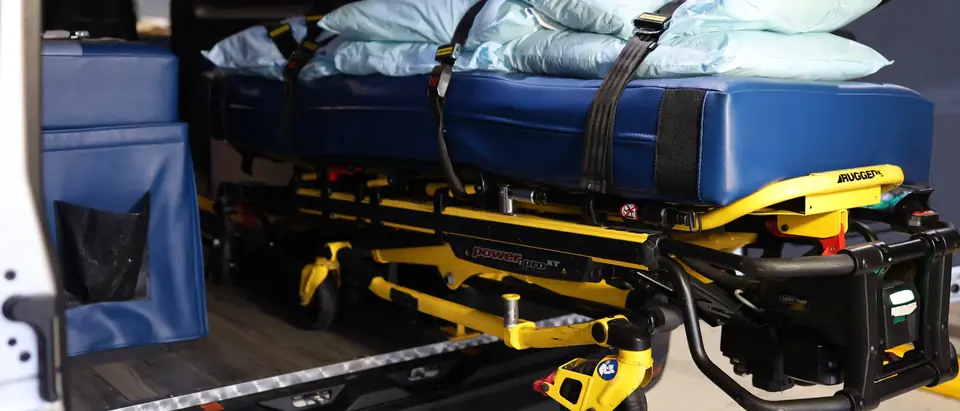
Picture a trip like the ones our crews run most weeks. The crew arrives at the time the care team agreed on. It’s worth asking the hospice nurse to time a comfort dose shortly before pickup, so the day starts well. Nobody rushes. One crew member talks with the patient and family while another goes over the medication schedule and paperwork with the staff. Then they move your loved one gently onto a real bed with a memory-foam mattress, with their own pillow and blanket if you brought them.
On the road, the medical professional keeps medications on the schedule the hospice team set, manages oxygen, helps with repositioning, and watches for anything that needs a call to the hospice team. On runs longer than about eight hours, two drivers take turns so the van can keep moving quietly while they sleep. Stops happen when the patient needs them. There’s a bedside commode with a privacy curtain, and drinks and snacks for whoever is riding along.
At the other end, the crew carries them inside and settles them into their own bed. They give the receiving hospice or the family a report on how the trip went: what was given and when, how they slept, what helped. Then they leave quietly.
How Are Pain and Comfort Medications Handled on the Way?
After “is there time,” this is what families worry about most. A few things to sort out before the trip:
- Send every medication with them, in the original containers, with the current schedule and enough for the whole trip. The crew gives what the hospice team has prescribed and sent along. They don’t carry their own supply.
- If comfort medications such as morphine may need to be given during the ride, tell us on the first call. It affects which medical professional we send, and it can change the quote, so it’s better to know up front.
- Continuous IV drips can’t run on our ground trips. If their pain medicine goes through a drip now, ask the hospice team whether it can be given another way for the trip.
- Ask the hospice team for written instructions for breakthrough pain or restlessness, and a number to call if those instructions aren’t enough.
The Questions Nobody Likes to Ask
What if Mom passes away on the way?
Many families ask this quietly, near the end of the first call. You deserve a straight answer. If your loved one dies during the trip, the crew can’t keep driving to the destination. They go to the nearest emergency department, because only a doctor can pronounce a death, and our crews aren’t allowed to keep transporting someone after they’ve died. If you aren’t in the van, you’ll be called right away. From there, the hospital staff help with next steps, and the family makes arrangements with a funeral home from that location.
It helps to talk this through before you leave, with the hospice team and with a funeral home near home. Ask the funeral home how they’d bring someone home from another state if it came to that. You’ll probably never need the answer. Having it can make the miles a little lighter.
What happens to Dad’s DNR in the van?
Tell us his code status when you book, and send a copy of the DNR, POLST, or advance directive with him. The crew follows it. Even with a DNR in place, if something serious happens on the road, the crew still heads to the nearest emergency department so a doctor can take over. Out-of-hospital DNR forms are state documents, and states don’t all treat another state’s form the same way. Ask the hospice team whether his will be recognized along the route and at home, and whether the receiving hospice needs a new one signed.
What if she gets worse before the trip date?
Call us as soon as the hospice team tells you. If a date isn’t locked in yet, we note what’s changed and keep her file open until the team says she can travel again. That’s also why we suggest waiting to set a firm date until the hospice team is confident in it. Once a date is booked, cancellation terms apply, so ask your Transport Specialist to go over them before you sign anything.
Does hospice pay for transportation?
It depends on the hospice. Each agency has its own transport policy, and what it covers for a local trip can be very different from a move to another state. Ask your hospice social worker directly.
Our long-distance hospice transport is private-pay, paid by the patient or family. You’ll have a same-day itemized quote before you decide anything, and the number you approve is the number you pay. We take cards, checks, Zelle, and wire transfers. CareCredit financing can spread the cost over time, and if your loved one served, mention it, since we offer a veteran discount. For what goes into the price, see long-distance medical transport cost.
Can more than one of us come?
Usually up to two family members can ride along, each with a seat and a bed to rest on beside the patient. Most families send one or two people.
For the Family Member in the Seat Beside the Bed
You don’t have to do anything clinical. The medical professional handles the care. Your job is to be there. Talk to them, hold their hand, play the music they love. Hospice teams often encourage families to keep talking even when their loved one is resting, because a familiar voice can be a comfort.
Eat when the van stops for meals, rest when you can, keep your phone charged, and text the family at home when you’re an hour out so someone can meet you at the door. Pack light: the medications and schedule, the DNR or advance directive, power of attorney or healthcare proxy papers, phone numbers for both hospice teams, their glasses, hearing aids, and dentures, a familiar blanket, and a change of clothes for you.
Bringing someone home for the time that’s left is one of the kindest things a family can do, and distance shouldn’t be what stands in the way. If you do one thing today, call their hospice team with two questions: is the trip safe, and can you help set up hospice where we’re going?
Then call us at 800-550-1025, any hour. Tell us where they are, where home is, and how they’ve been this week. You’ll have a price the same day, and there’s no obligation in asking. If you’d rather start in writing, request a quote here, or read more about how our hospice trips work.